Why choose StoreLinkr?
Manage Multiple Webshops & Order Import
Running multiple webshops quickly turns into logging in everywhere, applying the same product change three times, and collecting orders from different systems at the end of the day. In a mature e-commerce strategy, a multichannel presence is essential — but without central management, the workload grows just as fast as the revenue. StoreLinkr solves this with one dashboard for all your shops.
Every platform in one dashboard
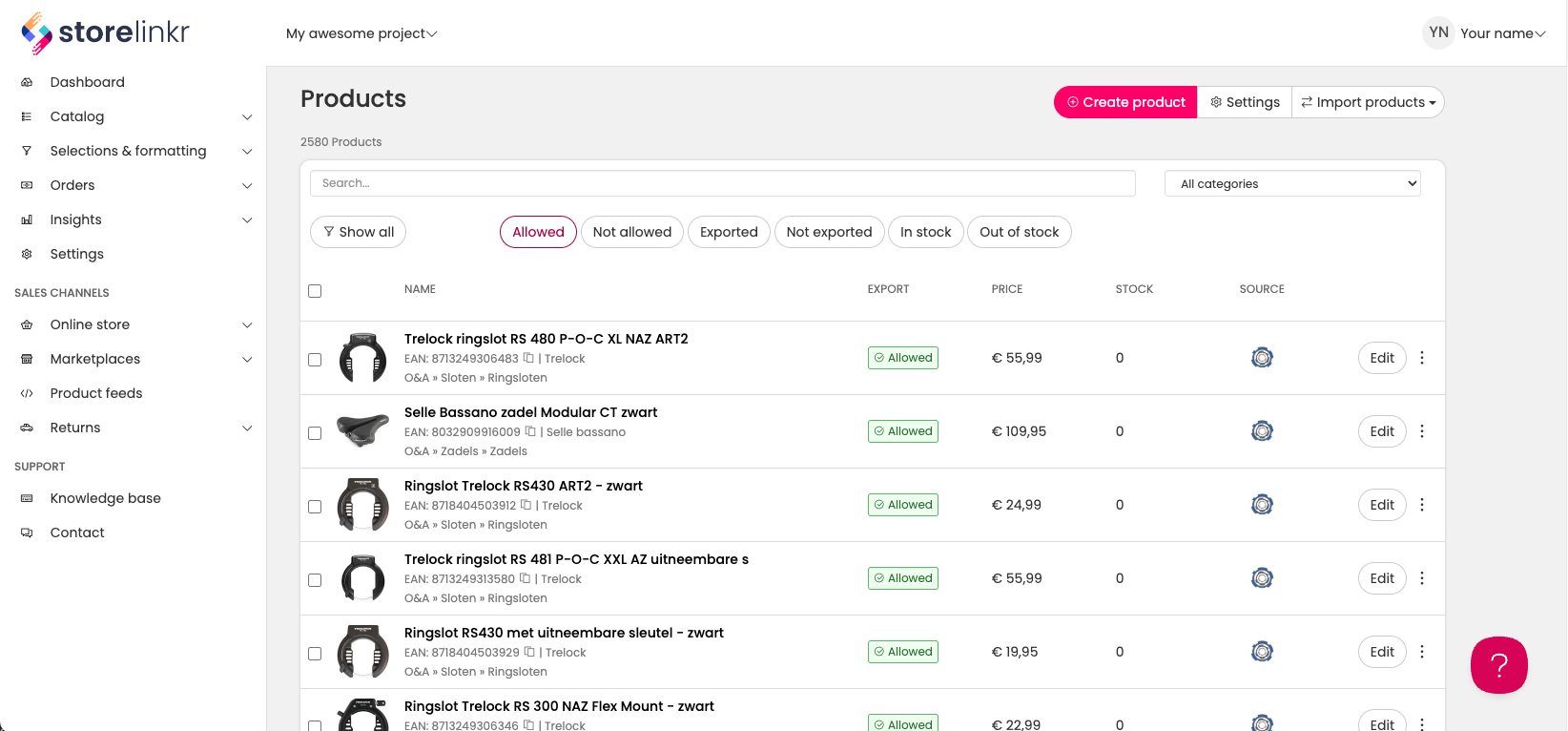
With StoreLinkr, you connect different webshop platforms such as Shopify, WooCommerce, and SitePack to one central environment. Whether you run multiple brands, operate separate B2B and B2C shops, or maintain a localized store per country, you manage product data, inventory, and prices from a single source without duplicating work. Selection rules based on category, brand, or attributes let you define exactly which part of your assortment is visible in each shop.
One order flow, dedicated prices per shop
All orders are collected in real-time into one clear order feed and routed automatically to your warehouse, ERP, or a WMS such as Picqer or Stockhub. Tracking codes travel back to the right shop and customer automatically, ensuring lightning-fast fulfillment. At the same time, each webshop gets its own price list: net B2B prices in your business shop, consumer prices in your brand stores, and country-specific prices including VAT and currency in your international shops.
Inventory that is right everywhere
When shop A sells the last unit, stock on shops B and C is updated within seconds. That prevents overselling and lost sales without manual corrections. The daily work that disappears: no more creating products per shop, no price changes across multiple admin panels, and no retyping orders into your warehouse or your accounting in Exact Online or Jortt.
This solution fits entrepreneurs who want to scale with multiple shops or brands, but not with multiple teams: from the retailer launching a second niche store next to the main shop to organizations running ten localized shops across Europe. A new shop connects to your existing catalog, turning an additional sales channel into a matter of configuration rather than starting over.
Efficiency
Save hours of manual work every week with intelligent automation.
Accuracy
Eliminate human error by automating data transfers and synchronization.
Scalability
Grow your business without increasing overhead by scaling effortlessly.
Frequently Asked Questions
Everything you need to know about manage multiple webshops & order import.